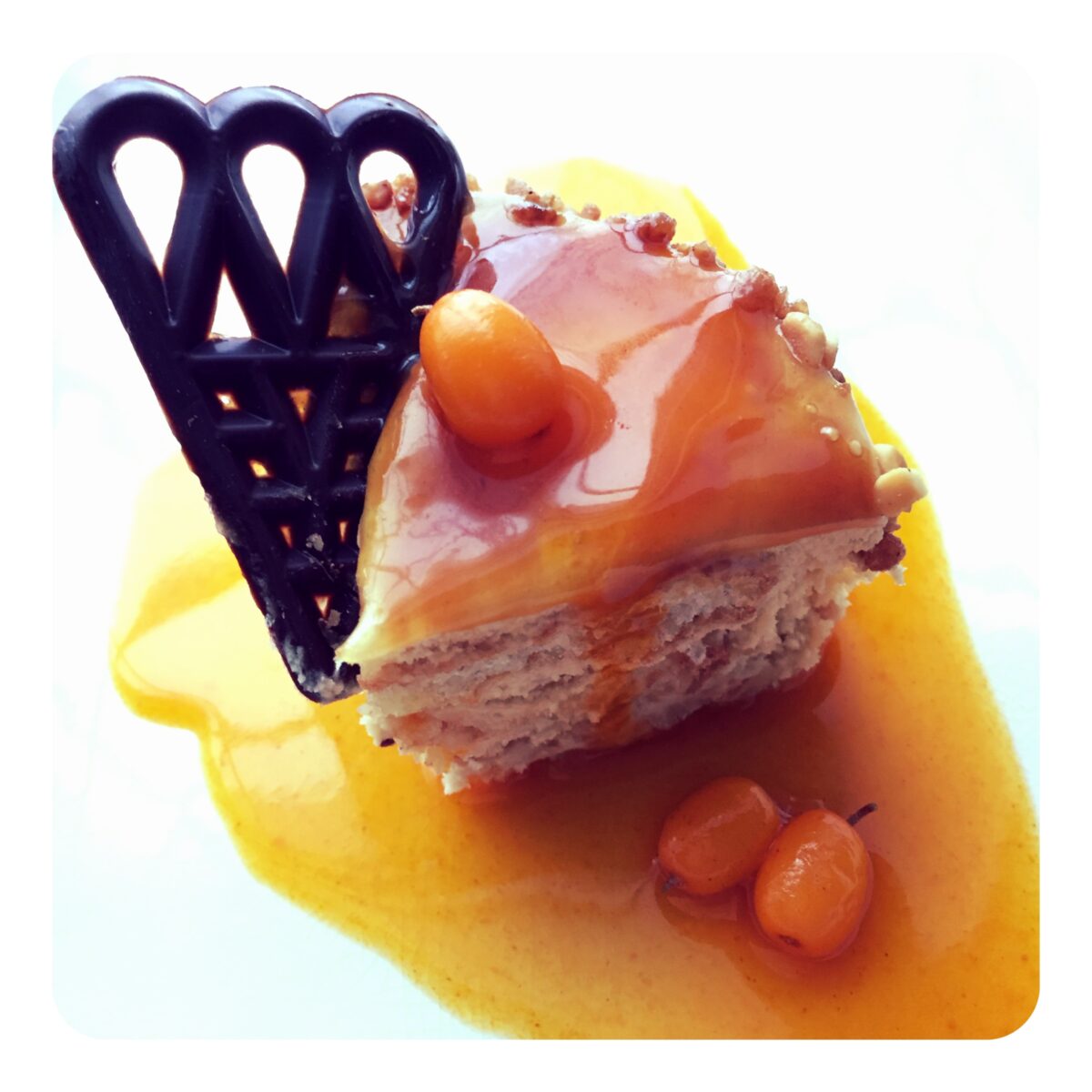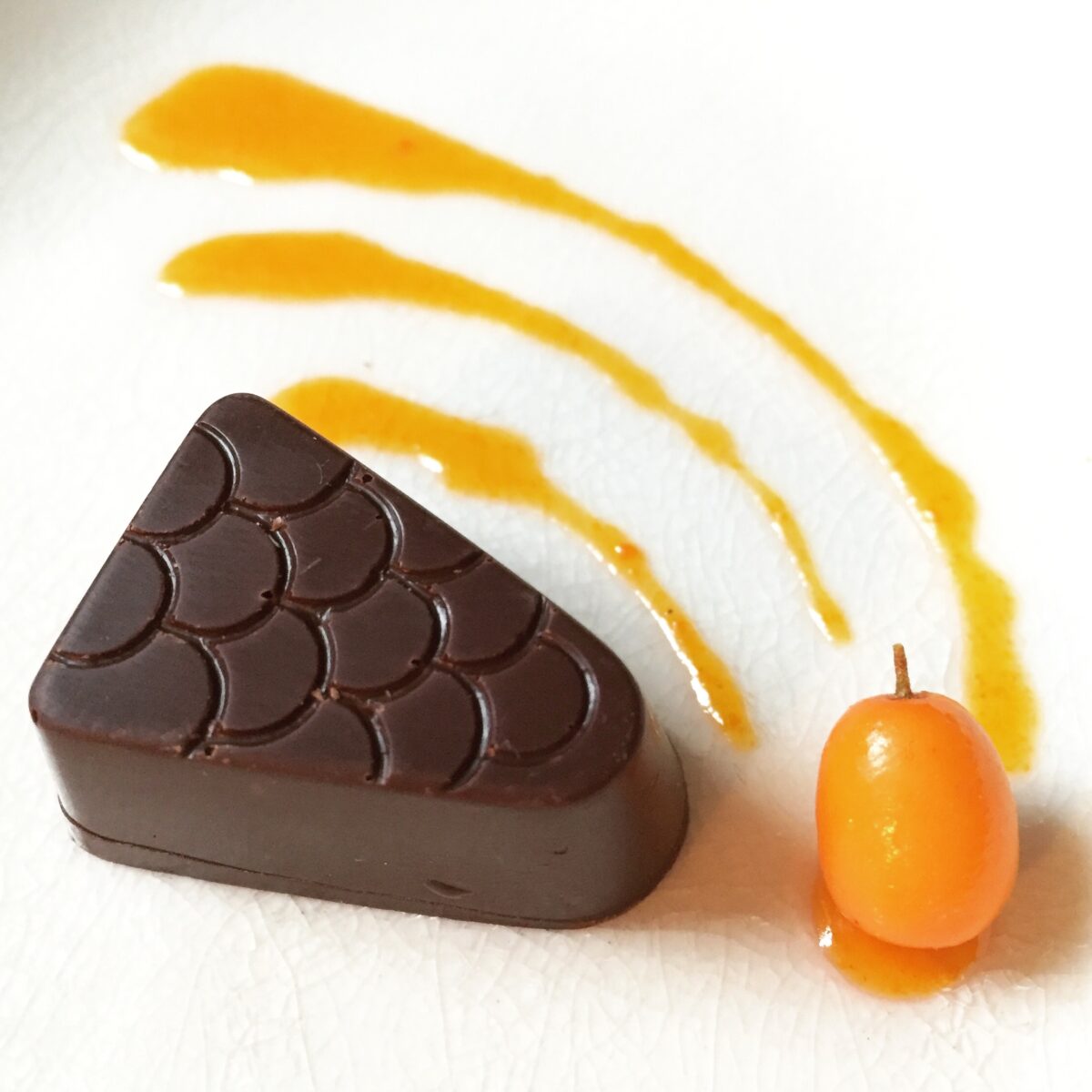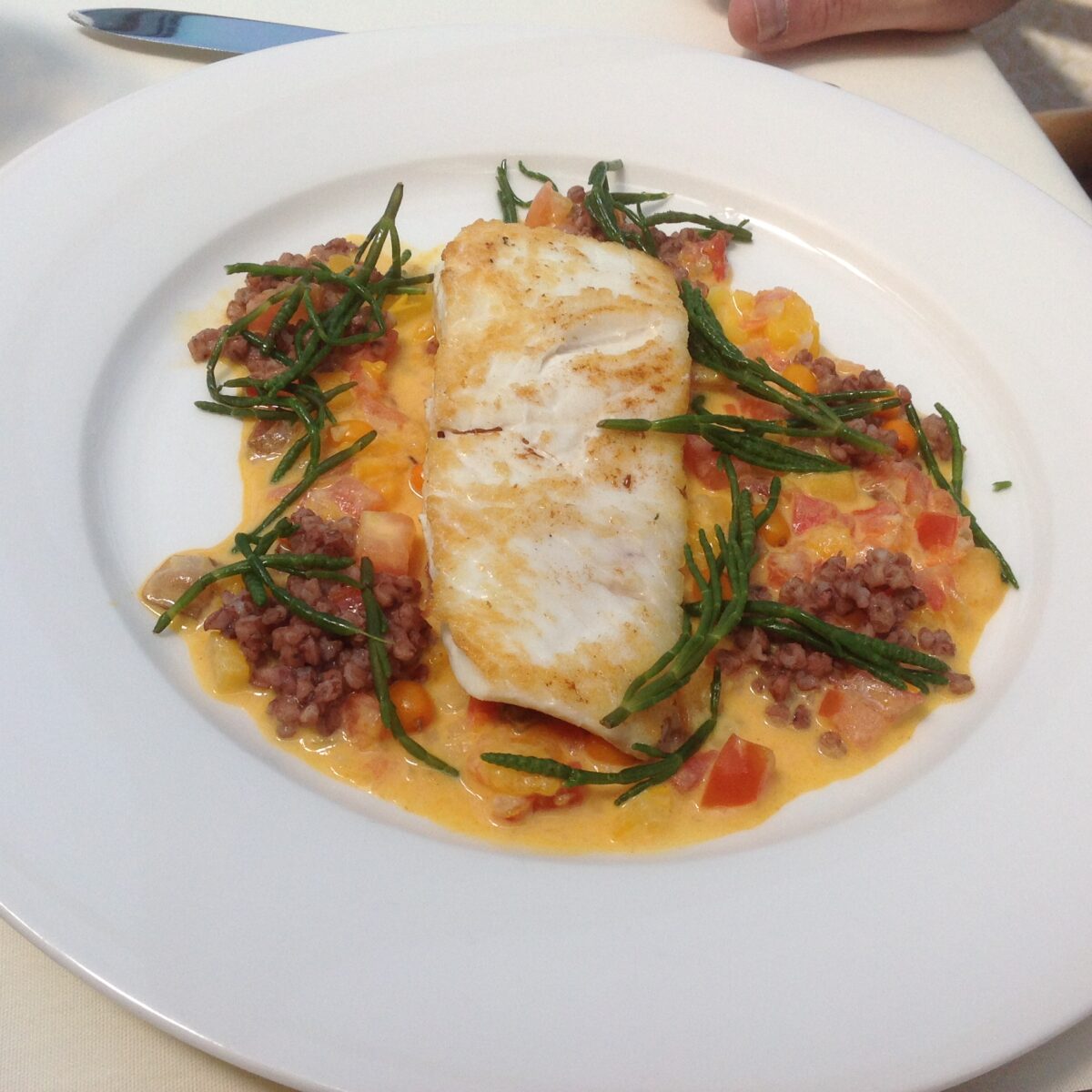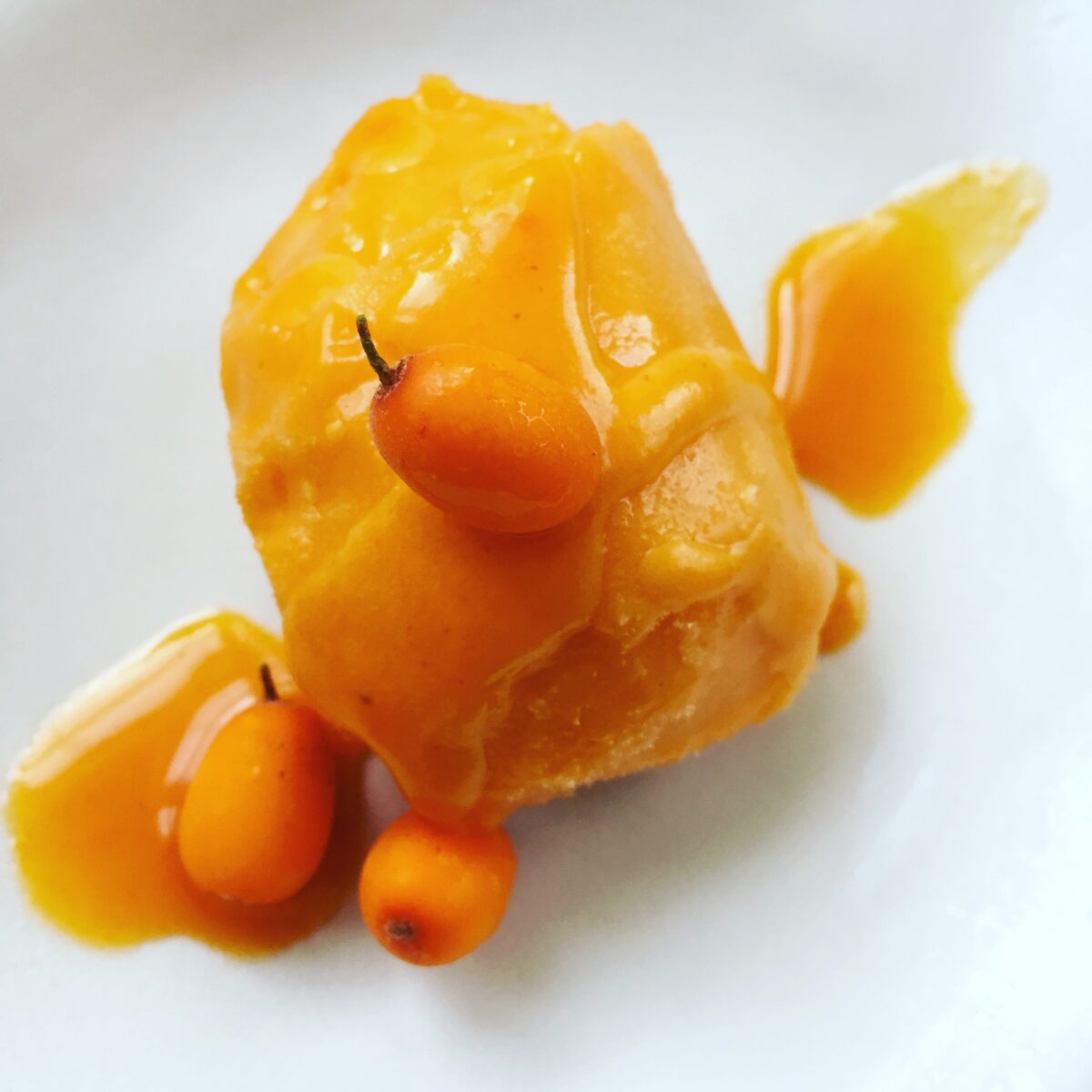
Omega-3 gets plenty of attention. Omega-6 is familiar too.
But what about omega-7?
This lesser-known family of fatty acids has been attracting increasing research interest, particularly for its potential role in skin and mucous membrane health. And one of the most interesting natural plant sources of omega 7 fatty acids happens to be a tiny orange berry: sea buckthorn.
Sea buckthorn is already known for vitamin C, carotenoids and flavonoids, but it also contains something we don’t normally associate with berries: a surprisingly diverse mixture of fatty acids, including omega-3, omega-6, omega-7 and omega-9. Of these, omega-7 is particularly interesting because rich plant sources are relatively uncommon. [1]
So, what exactly is omega-7, what are the potential omega 7 fatty acids benefits researchers are investigating—and what does the research tell us about sea buckthorn?
What are omega-7 fatty acids?
Omega-7 refers to a family of monounsaturated fatty acids. The one most often discussed in relation to sea buckthorn is palmitoleic acid, or C16:1 n-7.
Unlike essential fatty acids such as omega-3 alpha-linolenic acid and omega-6 linoleic acid, palmitoleic acid can be produced by the human body. That doesn’t make dietary sources uninteresting, however. Researchers studying omega 7 fatty acids benefits have investigated palmitoleic acid for its potential roles in areas ranging from skin-barrier function to metabolic health.
What makes sea buckthorn particularly intriguing is that high concentrations of palmitoleic acid are relatively uncommon among plant oils.
Sea buckthorn fruit oil is one notable exception.
Where is the omega-7 hiding in a sea buckthorn berry?
Here’s where sea buckthorn gets especially interesting.
A sea buckthorn berry contains two distinctly different sources of oil: the seed and the fleshy pulp and peel surrounding it. Their fatty-acid profiles are surprisingly different.
Sea buckthorn seed oil is particularly rich in polyunsaturated fatty acids, including omega-3 alpha-linolenic acid and omega-6 linoleic acid. It also contains omega-9, primarily in the form of oleic acid. [1]
The pulp or fruit oil, on the other hand, has a very different fatty-acid profile. It also contains omega-9 oleic acid, but this is where much of sea buckthorn’s distinctive omega-7 is found. [1]
Scientific reviews report that palmitoleic acid can account for approximately 30–40% of the fatty acids in sea buckthorn pulp oil, although concentrations vary considerably according to cultivar, growing region, ripeness and processing method.
That distinction is worth remembering. When you hear about sea buckthorn as a source of omega 7 fatty acids, we’re primarily talking about the orange fruit surrounding the seed—not the seed itself.
And because the fleshy portion makes up most of the berry, research has found that the fatty-acid composition of whole-fruit oil tends to resemble that of the pulp and peel more closely than that of seed oil. [1]
Taken together, the fruit and seed mean that sea buckthorn naturally contains omega-3, omega-6, omega-7 and omega-9 fatty acids. Omega-9 isn’t unique to sea buckthorn—oleic acid is also abundant in foods such as olive oil, avocados and many nuts—but the berry’s naturally high concentration of omega-7 in its fruit oil is far less common in the plant world.
Why are researchers interested in omega-7 fatty acids?
One of the most interesting areas of research into potential omega 7 fatty acids benefits involves the skin barrier.
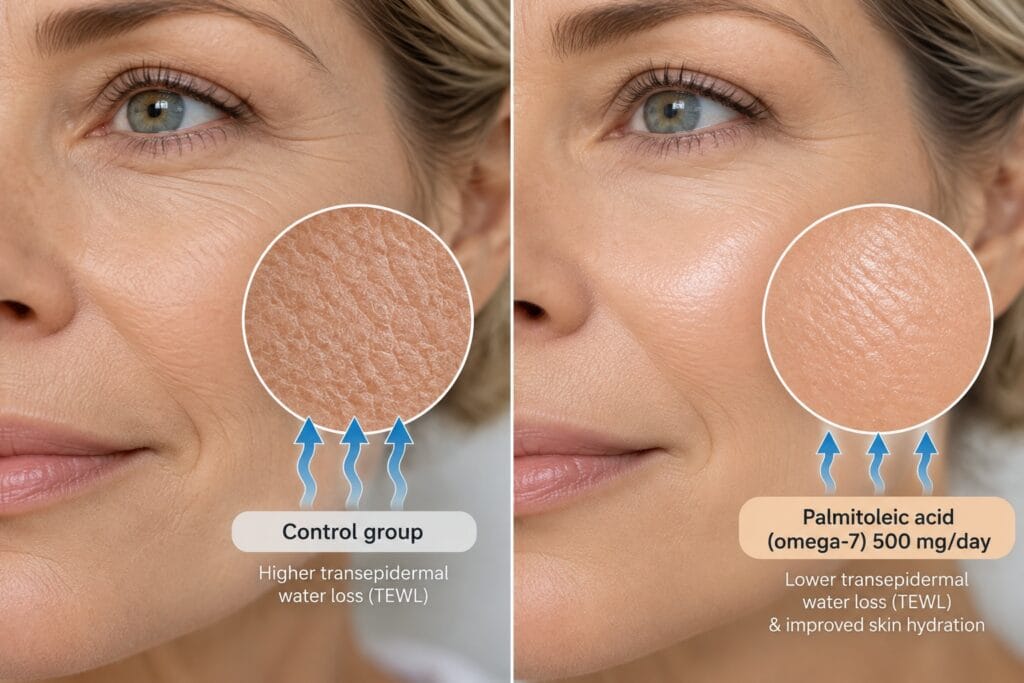
In a 2023 randomized, double-blind, placebo-controlled study, 90 healthy adults received either palmitoleic acid or a control oil for 12 weeks. Participants receiving 500 mg of palmitoleic acid per day showed significant improvements in skin hydration and transepidermal water loss compared with the control group after 12 weeks. [2]
Transepidermal water loss measures how readily water escapes through the skin. Lower water loss and better hydration are both indicators associated with a healthier skin barrier.
Interestingly, the researchers specifically noted sea buckthorn oil when discussing natural sources of palmitoleic acid.
And omega-7 isn’t the only reason researchers have taken an interest in sea buckthorn and skin.
Sea buckthorn oil and skin health
A more recent randomized controlled trial investigated sea buckthorn oil itself rather than isolated palmitoleic acid.
Forty women over age 45 were divided between a sea buckthorn oil group and placebo group. The women consuming sea buckthorn oil took 1 g per day for 12 weeks. [3]
Researchers reported improvements in several measured skin parameters during the study, including skin moisture and elasticity. They also investigated antioxidant and inflammatory markers as well as eye and vaginal dryness. [3]
This is particularly interesting because sea buckthorn fruit oil isn’t simply omega-7 in isolation.
The oil naturally contains a collection of fat-soluble compounds, including carotenoids, tocopherols and phytosterols, alongside its fatty acids. These compounds are also responsible for the oil’s distinctive deep orange-red colour.
In other words, researchers aren’t only interested in a single molecule. Sea buckthorn provides omega-7 as part of a much more complex natural food matrix.
Sea buckthorn and dry eyes
Another fascinating area of research involves the eyes.
In a double-blind, randomized clinical trial, 100 adults experiencing dry-eye symptoms were assigned to consume either 2 g of sea buckthorn oil or a placebo daily for three months during the autumn and winter. [4]
Researchers measured tear-film characteristics along with participants’ symptoms.
Tear-film osmolarity generally increased during the study period, but the increase was significantly smaller among participants taking sea buckthorn oil. The researchers also reported positive effects on some dry-eye symptoms. [4]
The study is especially interesting because the tear film contains a lipid layer that helps protect the eye’s surface and limit evaporation.
Another intriguing connection: mucous membranes
The potential relationship between sea buckthorn oil and mucosal health has also attracted clinical research.
A randomized, double-blind, placebo-controlled study followed 116 postmenopausal women experiencing vaginal dryness, itching or burning. Participants received either 3 g of sea buckthorn oil or placebo daily for three months. [5]
Compared with placebo, researchers found a significantly better rate of improvement in the integrity of the vaginal epithelium in the sea buckthorn group in the intention-to-treat analysis. [5]
The researchers concluded that sea buckthorn oil showed beneficial effects on vaginal health and identified it as an interesting potential nutritional approach to supporting mucosal integrity.
Taken together with the skin and dry-eye research, it helps explain why sea buckthorn oil and its omega 7 fatty acids have generated so much interest in relation to tissues that depend on healthy lipid barriers.
But sea buckthorn is much more than omega-7
Focusing only on omega-7 would actually undersell the berry.
Sea buckthorn contains an unusually broad mixture of water-soluble and fat-soluble compounds.
The berries contain vitamin C along with flavonoids and other phenolic compounds. Their characteristic yellow-orange colour comes from carotenoids including beta-carotene, zeaxanthin and others, while their lipid fraction supplies tocopherols and a diverse mixture of fatty acids.
Researchers have even demonstrated that compounds from the berries make their way into the bloodstream after eating them.
In one randomized study involving 229 healthy adults, participants consumed 28 g of sea buckthorn berries every day for three months. Compared with placebo, berry consumption significantly increased blood concentrations of the flavonols quercetin and isorhamnetin. [6]
That’s particularly relevant if you’re interested in sea buckthorn as a food rather than simply as a supplement.
Twenty-eight grams isn’t an exotic laboratory extract. It’s a small serving of berries.
Whole berries, juice, purée or oil?
Each form of sea buckthorn offers something a little different.
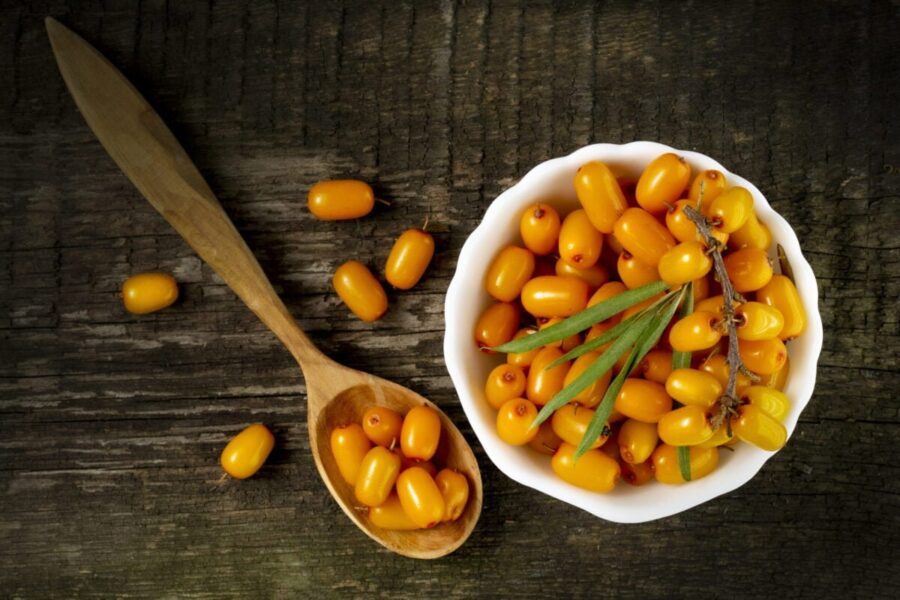
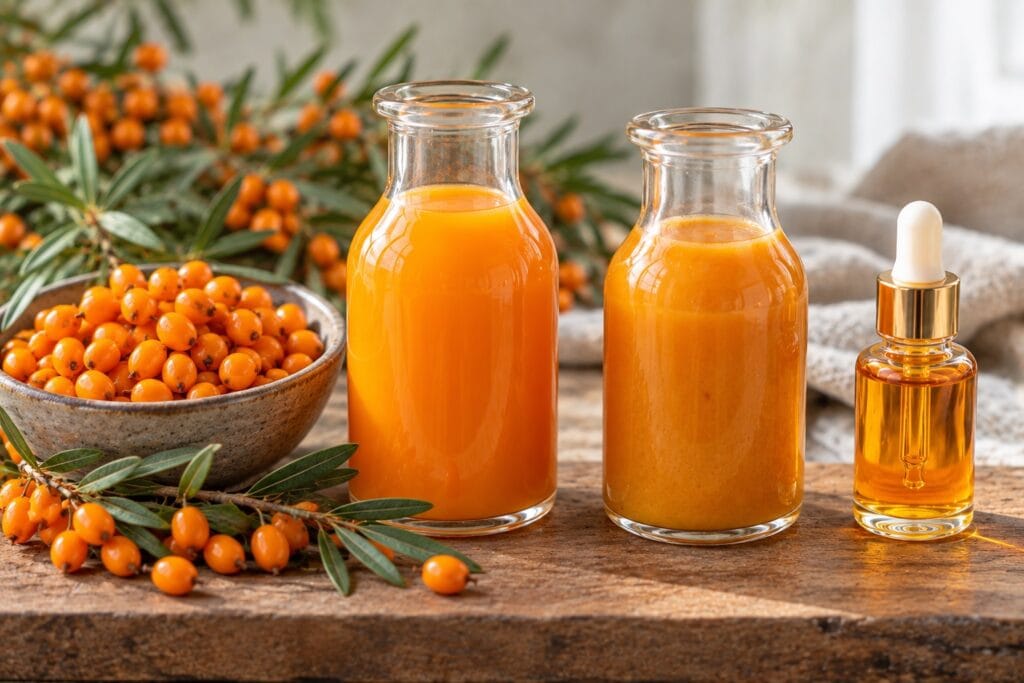
Whole sea buckthorn berries retain the pulp, peel and seed, making them an excellent way to experience the berry as a whole food.
Sea buckthorn purée retains much of the fruit pulp and its naturally occurring compounds while offering an easy way to incorporate sea buckthorn into smoothies, sauces, beverages, dressings and recipes.
Sea buckthorn juice highlights the berry’s water-soluble components, including vitamin C and many of its characteristic organic acids.
And sea buckthorn fruit or pulp oil concentrates the lipid-soluble portion of the berry—including the omega-7 that has attracted so much scientific interest.
Rather than thinking of one as the “best” form, it makes more sense to think of them as different expressions of the same remarkably complex fruit.
An unusual berry worth discovering
Sea buckthorn doesn’t fit neatly into the nutritional profile we normally associate with berries.
Yes, it contains vitamin C, colourful plant pigments and polyphenols.
But hidden inside that bright orange pulp is something far less common in the fruit world: a naturally occurring oil notable for its omega-7 content.
Human studies have now explored sea buckthorn oil in relation to skin, dry eyes and mucous membrane health, while research into palmitoleic acid itself continues to expand our understanding of omega 7 fatty acids benefits. [2–5]
Perhaps the most interesting thing about sea buckthorn, however, is that omega-7 doesn’t occur alone. It arrives alongside omega-3, omega-6 and omega-9 fatty acids, carotenoids, tocopherols, flavonoids, vitamin C and a host of other naturally occurring compounds contained within one very small berry.
Omega-7 may be one more reason to discover sea buckthorn—but it certainly isn’t the only one.
Ready to try sea buckthorn?
You don’t need to start with supplements or complicated preparations.
Frozen sea buckthorn berries and sea buckthorn purée can be added to smoothies, yogurt, breakfast bowls, sauces, vinaigrettes, marinades and beverages. Their naturally tart, tropical-citrus flavour means a little goes a long way.
Explore our sea buckthorn products and discover your own favourite way to bring this remarkable berry into the kitchen.
Scientific References
1. Fatima T, Snyder CL, Schroeder WR, et al. (2012). Fatty Acid Composition of Developing Sea Buckthorn (Hippophae rhamnoides L.) Berry and the Transcriptome of the Mature Seed. PLOS ONE, 7(4): e34099.
https://doi.org/10.1371/journal.pone.0034099
2. Koh YG, Seok J, Park JW, et al. (2023). Efficacy and safety of oral palmitoleic acid supplementation for skin barrier improvement: A 12-week, randomized, double-blinded, placebo-controlled study. Heliyon, 9(6): e16711.
https://doi.org/10.1016/j.heliyon.2023.e16711
3. Chan LP, Yen TW, Tseng YP, et al. (2024). The impact of oral sea-buckthorn oil on skin, blood markers, ocular, and vaginal health: A randomized control trial. Journal of Functional Foods, 112: 105973.
https://doi.org/10.1016/j.jff.2023.105973
4. Larmo PS, Järvinen RL, Setälä NL, et al. (2010). Oral Sea Buckthorn Oil Attenuates Tear Film Osmolarity and Symptoms in Individuals with Dry Eye. The Journal of Nutrition, 140(8): 1462–1468.
https://doi.org/10.3945/jn.109.118901
5. Larmo PS, Yang B, Hyssälä J, Kallio HP, Erkkola R. (2014). Effects of sea buckthorn oil intake on vaginal atrophy in postmenopausal women: a randomized, double-blind, placebo-controlled study. Maturitas, 79(3): 316–321.
https://doi.org/10.1016/j.maturitas.2014.07.010
6. Larmo PS, Yang B, Hurme SAM, et al. (2009). Effect of a low dose of sea buckthorn berries on circulating concentrations of cholesterol, triacylglycerols, and flavonols in healthy adults. European Journal of Nutrition, 48(5): 277–282.
https://doi.org/10.1007/s00394-009-0011-4