
Sea Buckthorn Fire Cider Recipe with Ginger & Chili
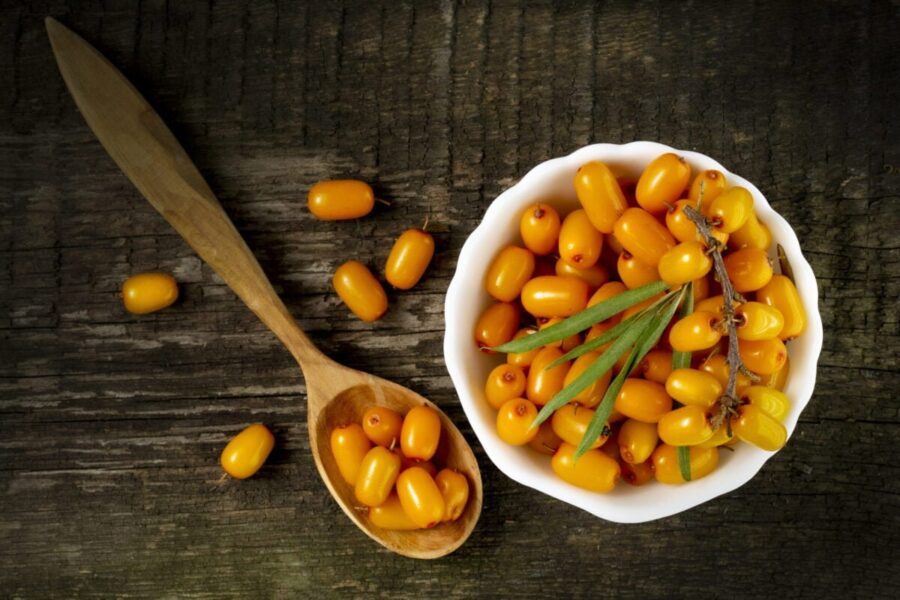
September is sea buckthorn season, and if you are looking for something different to make with those intensely tart orange berries, this sea buckthorn fire cider recipe may be one of the most natural pairings.
Fire cider is a strongly flavoured infused apple cider vinegar traditionally made with pungent ingredients such as ginger, garlic, onion, hot peppers and horseradish. Modern fire cider is closely associated with American herbalist Rosemary Gladstar, who began teaching and sharing her version several decades ago. Since then, countless variations of the traditional fire cider recipe have appeared, incorporating everything from turmeric and citrus to herbs, spices and locally available fruits.
Our version takes another turn: sea buckthorn.
Instead of trying to hide the berry behind a long list of traditional ingredients, this recipe lets its naturally tart, citrus-like flavour become part of the character of the cider. Fresh ginger and chili provide the heat, while sea buckthorn adds a bright fruitiness that works naturally with apple cider vinegar.
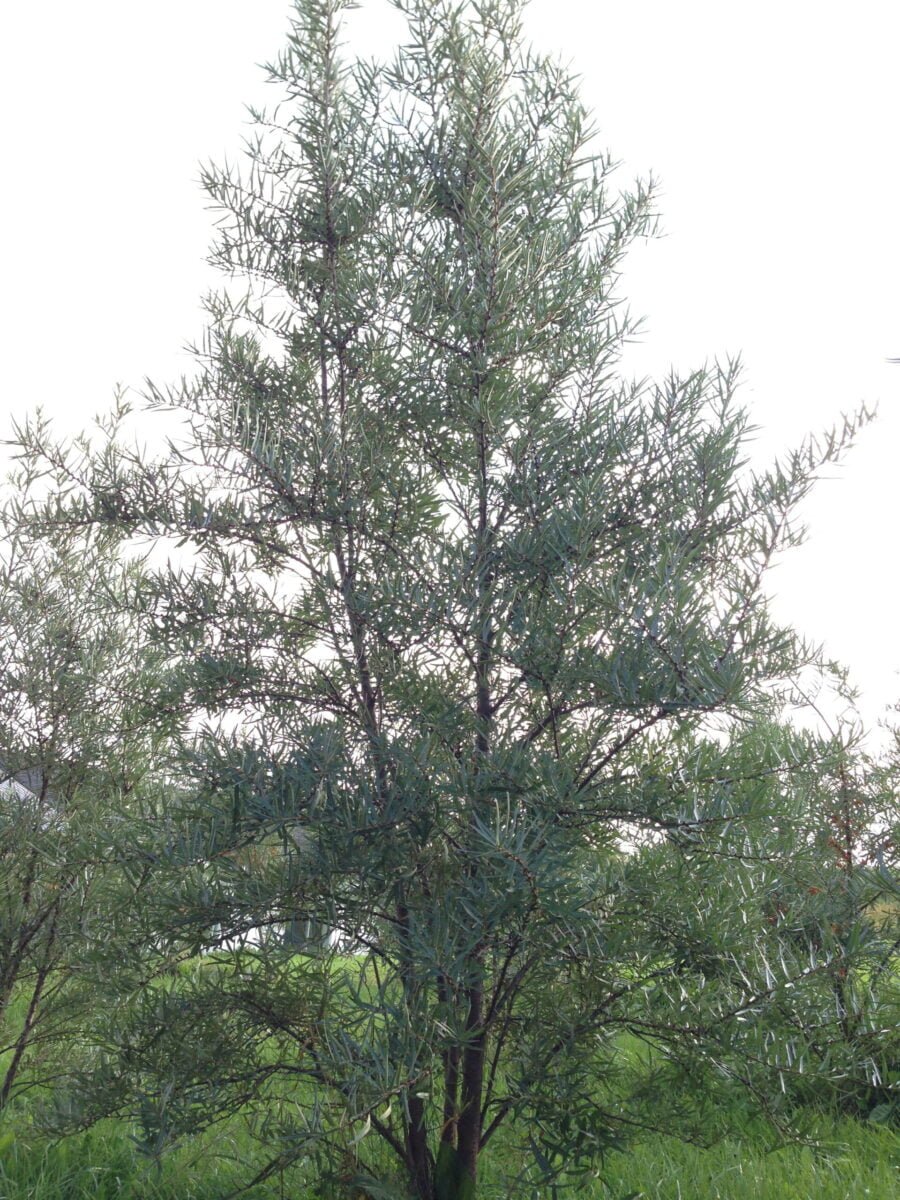
And because sea buckthorn berries generally ripen around the end of August and beginning of September in Canadian growing regions, this is an especially fitting fire cider recipe to make as summer begins giving way to fall.
What Is Fire Cider?
Fire cider is essentially a strongly flavoured vinegar infusion. Apple cider vinegar is infused with pungent vegetables, roots, spices and hot peppers, then strained and usually balanced with honey.
Recipes vary enormously. Ginger, garlic, onion and chili are common, while other versions may include horseradish, turmeric, citrus, rosemary or additional spices.
Rather than thinking of fire cider as something that has to follow a rigid formula, it is more useful to think about the balance:
acid + heat + aromatics + spice + a little sweetness.
Sea buckthorn slots beautifully into that equation.
Why Add Sea Buckthorn?
Sea buckthorn berries are naturally very tart, with an unusual flavour somewhere between citrus, tropical fruit and sour berries. That acidity pairs naturally with apple cider vinegar while contributing much more fruit character than lemon alone.
The berries are also naturally rich in several interesting plant compounds. Research has identified vitamin C, carotenoids and numerous polyphenols in sea buckthorn fruit, although the exact concentrations vary considerably by cultivar, growing conditions, maturity and processing.
For this recipe, however, the biggest reason to use sea buckthorn is simple:
it tastes good.
The combination of sea buckthorn, ginger, chili, cinnamon and orange produces a fire cider that is bright and fiery rather than overwhelmingly garlicky or medicinal.

Sea Buckthorn Fire Cider Recipe
Makes approximately 750–900 mL
Ingredients
- 1 cup fresh or frozen sea buckthorn berries, lightly crushed
- ¾ cup fresh ginger, thinly sliced
- 1 small onion, thinly sliced
- 6–8 garlic cloves, lightly crushed
- 2 fresh red chilies, sliced
- 2 cinnamon sticks
- 1 teaspoon whole black peppercorns
- 2 tablespoons sliced fresh turmeric
or 1 teaspoon ground turmeric - Peel of ½ to 1 orange, with as little white pith as possible
- 750–900 mL apple cider vinegar, 5% acidity, or enough to generously cover the ingredients
- 100–150 mL pure sea buckthorn juice, optional but recommended
- About ¼ cup honey, or to taste
Choosing Your Chili
You want noticeable heat, but the goal isn’t to obliterate every other flavour in the jar.
Fruity red chilies such as Fresno, red jalapeño, cherry bomb or moderately hot cayenne peppers work particularly well with sea buckthorn.
If your peppers are very hot, use less. If they are mild, add another.
Directions
1. Prepare the ingredients
Wash the fruit, vegetables and fresh spices well.
Lightly crush the sea buckthorn berries to break some of their skins. Thinly slice the ginger, onion, turmeric and chilies so the vinegar can easily circulate around them.
Place the prepared ingredients, cinnamon and peppercorns in a clean heat-safe jar.
Avoid packing the jar tightly.
2. Heat the vinegar
Heat the apple cider vinegar in a non-reactive saucepan until it reaches approximately 88–91°C (190–195°F), just below boiling.
Pour the hot vinegar over the prepared ingredients, making sure everything is completely covered.
Using heated vinegar is a more food-safety-conscious method for preparing flavoured vinegars. University of Minnesota Extension recommends heating apple cider vinegar before making fire cider and keeping the ingredients sufficiently hot during preparation.
3. Infuse
Seal the jar with a clean lid.
If using a metal lid, place a non-reactive barrier between the vinegar and the metal to prevent corrosion.
Allow the mixture to infuse in a cool, dark place for approximately 2–4 weeks.
Gently shake or turn the jar occasionally.
Taste it after about two weeks. Continue infusing if you want a stronger ginger, garlic and spice flavour.
4. Strain
Strain the fire cider through a fine sieve, cheesecloth or coffee filter, pressing the ingredients to extract as much liquid as possible.
Discard or compost the solids.
5. Add the sea buckthorn juice
For a brighter, fresher sea buckthorn flavour, stir 100–150 mL of pure sea buckthorn juice into the strained vinegar.
This step is optional. The infused berries already contribute sea buckthorn flavour, but the additional juice makes the fruit much more noticeable in the finished cider.
Because fresh juice is being added after the infusion, this version should be kept refrigerated rather than treated as a shelf-stable preserved product.
6. Sweeten
Stir in approximately ¼ cup honey.
Taste before adding more.
The goal isn’t to make a sweet drink. Honey should simply round out the vinegar, berry acidity and chili heat.
Sea buckthorn is already intensely tart, so you may prefer slightly more honey than you would use in a conventional fire cider.
Why Use Both Berries and Juice?
You can make this recipe with either berries or juice, but using both produces the most interesting result.
The berries infuse slowly with the ginger, chili and spices, integrating sea buckthorn into the overall flavour.
The juice, added after straining, gives the finished cider a brighter berry flavour and more vivid colour.
If you only have berries, simply omit the juice.
If you only have juice, prepare the vinegar infusion without the berries and add approximately 150 mL sea buckthorn juice after straining.
Why There Is No Lemon
Many fire cider recipes contain lemon, but it isn’t necessary here.
Sea buckthorn already contributes considerable acidity and a naturally citrus-like flavour. Adding lemon on top of sea buckthorn, apple cider vinegar and orange can make the finished drink unnecessarily sharp.
Orange peel provides a softer aromatic citrus note without adding much additional juice or acidity.
Be careful to remove most of the white pith from the peel, as it can introduce bitterness.

What Does Sea Buckthorn Fire Cider Taste Like?
Expect several flavours to arrive almost in succession.
First comes the sharpness of apple cider vinegar and sea buckthorn.
Then ginger and chili begin to warm the palate.
Garlic and onion add savoury depth without dominating, while cinnamon and orange linger in the background.
Honey smooths everything out.
The result should be tart, spicy, aromatic and lightly fruity—not sweet and not painfully hot.
If your first reaction is simply “vinegar!”, add a little more honey.
If it tastes flat, add more fresh sea buckthorn juice.
If the chili has taken over completely… congratulations, you’ve made pepper spray with nutritional aspirations. Dilute it with additional apple cider vinegar and honey.
How to Use Fire Cider
Fire cider is often taken by the spoonful, but there is no reason to limit it to that.
Try it:
- straight in a small serving
- diluted with still or sparkling water
- stirred into warm water
- mixed into a savoury cocktail or non-alcoholic drink
- whisked with olive oil for a spicy vinaigrette
- added to marinades
- splashed over roasted vegetables
- stirred into sauces where you want acidity and heat
- mixed with additional honey as a glaze
One of the advantages of making fire cider as a genuinely good flavoured vinegar is that it becomes useful in the kitchen rather than becoming another forgotten jar of something you’re supposedly meant to consume because it’s “good for you.”
Adjusting the Recipe
Fire cider is extremely adaptable.
Want more sea buckthorn flavour?
Increase the sea buckthorn juice after straining rather than packing additional berries into the infusion.
Want more heat?
Increase the ginger first, then the chili.
Ginger builds warmth without masking the fruit as quickly as very hot peppers can.
Want more cinnamon?
Two sticks per litre give noticeable warmth without making the cider taste like Christmas potpourri. I wouldn’t increase it much beyond this.
Want it less garlicky?
Reduce the garlic to four cloves.
Want it sweeter?
Add honey gradually after straining. It is much easier to add sweetness than remove it.
Storage
Once the sea buckthorn juice and honey have been added, store the finished fire cider in a clean, tightly sealed bottle in the refrigerator.
Refrigeration also helps preserve the flavour and freshness of homemade flavoured vinegars.
Always use clean utensils when serving it.
If you notice mould, unexpected bubbling, cloudiness, sliminess or other signs of fermentation or spoilage, discard the batch rather than tasting it.
This recipe is intended as a refrigerated homemade preparation and has not been formulated or tested as a shelf-stable canned product.

A September Fire Cider Recipe Worth Making
Fire cider is the kind of recipe that naturally marks the change of seasons.
You prepare it while gardens and markets are still full of fresh ingredients, tuck the jar away to infuse, and return to it a few weeks later when the evenings have become noticeably cooler.
Adding sea buckthorn makes that seasonal connection even stronger.
Its vibrant orange berries ripen just as late summer begins turning toward autumn, and their sharp, citrus-like fruitiness is remarkably well suited to ginger, chili, black pepper and apple cider vinegar.
More importantly, this fire cider recipe actually allows the sea buckthorn to taste like sea buckthorn.
By leaving out the more overpowering horseradish, increasing the ginger and chili, keeping the citrus simple, and adding fresh sea buckthorn juice after the infusion, the berry remains a recognizable part of the finished cider rather than disappearing behind the other ingredients.
The result is tart, warming, fruity and fiery enough to deserve the name.
Make a jar in September.
By October, you may have found a new seasonal tradition.