
When you think of sea buckthorn, you probably picture its vibrant orange berries, packed with nutrients and prized for their tart, citrus-like flavour. But behind every thriving shrub is something just as important: healthy soil. Sea buckthorn is already unique in that it fixes nitrogen through its root nodules, enriching the earth where it grows. Even so, these resilient shrubs benefit from a little extra support. One of the simplest and most effective ways to do this is by feeding them compost tea.
What is Compost Tea?
Compost tea is a liquid extract made by steeping good-quality compost in water. Unlike raw leachate that drips out of a compost bin, true compost tea is brewed intentionally to extract beneficial microbes, nutrients, and organic compounds. When made properly, it becomes a living solution, full of bacteria, fungi, protozoa, and nematodes that all work together to build healthier soil and more resilient plants.
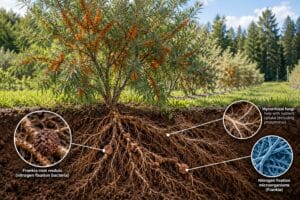
For sea buckthorn growers, compost tea is a natural fit. These shrubs thrive in well-drained, sandy soils that can sometimes lack microbial diversity. Adding compost tea boosts the life in the soil, complementing sea buckthorn’s natural nitrogen-fixing ability.
Benefits for Sea Buckthorn Plants
1. Enhanced Microbial Life
The most powerful role of compost tea is in restoring and diversifying soil biology. Sea buckthorn roots already host nitrogen-fixing bacteria (Frankia), but the presence of a wider microbial community improves the balance in the rhizosphere, ensuring better nutrient cycling.
2. Improved Nutrient Uptake
Many nutrients—like phosphorus, potassium, and trace minerals—become more available to plants when microbes break them down. A regular dose of compost tea helps sea buckthorn absorb more of what’s already in the soil, reducing the need for external fertilizers.
3. Disease Suppression
Healthy microbes outcompete harmful fungi and bacteria that might otherwise cause issues such as root rot or powdery mildew. Foliar sprays of compost tea can also provide a protective layer on leaves, helping prevent disease spores from taking hold.
4. Stress Resistance
Like most perennials, sea buckthorn experiences stress during pruning, fruiting, or periods of drought. Compost tea can act as a gentle tonic, strengthening plants against environmental pressures and improving their recovery.
Compost Tea Recipe: How to Make Compost Tea at Home
If you’ve never brewed compost tea before, it’s easier than you think. This simple compost tea recipe will give your sea buckthorn shrubs a microbial boost and help build stronger soil.
Ingredients
1 shovel of finished compost (screened if possible)
5 litres (1.3 gallons) of dechlorinated water
1 tablespoon unsulphured molasses (microbe food)
Optional: a small handful of kelp meal or alfalfa meal for added nutrients
Directions
Place the compost into a mesh bag (an old cotton pillowcase or store-bought compost tea bag works well) to keep solids contained.
Submerge the bag in a clean bucket filled with dechlorinated water.
Stir in the molasses to feed the microbes.
For aerated compost tea, use an aquarium pump or bubbler to keep oxygen flowing. Without a pump, stir a few times per day.
Brew for 24 hours (up to 36 for a stronger tea).
Remove the bag, dilute the tea 1:10 with water, and apply as a soil drench or foliar spray.
This easy method shows anyone how to make compost tea safely at home. Just remember: compost tea is alive! Use it within 24 hours for best results.

How and When to Apply Compost Tea to Sea Buckthorn
You can use compost tea in two main ways:
Soil drench: Pour it around the base of the shrub, letting it soak into the root zone.
Foliar spray: Apply directly onto the leaves to introduce beneficial microbes above ground.
For best results, apply every 2–4 weeks during the growing season. Key times include early spring (to kick-start growth), mid-summer (to support fruiting), and post-harvest (to help shrubs recover and prepare for winter).
Why Compost Tea Matters for Sustainable Growing
In permaculture, the goal is to work with nature, not against it. Compost tea fits this philosophy beautifully. It reduces the need for synthetic fertilizers, helps close the loop on waste by making use of homemade compost, and nurtures healthier, more productive sea buckthorn shrubs.
Sea buckthorn itself is already a regenerative plant—it fixes nitrogen, feeds pollinators, and provides food and habitat for wildlife. Adding compost tea to your management routine is a way to give back to this incredible shrub, ensuring it remains vigorous and abundant for years to come.
Final Thoughts
Healthy sea buckthorn plants don’t just happen—they’re the result of a living, thriving soil system. Compost tea is one of the most affordable and effective tools to build that system. Whether you’re caring for a backyard shrub or managing an orchard, a little compost tea can go a long way toward unlocking the full potential of your sea buckthorn plants.